Boulder, Colorado EV Charging Stations Info
General EV Charging Information
Boulder sits at the top of Colorado's EV adoption chart. Boulder County recorded the highest EV usage among larger counties in Colorado, with 816 electric miles per 1,000 residents. That density creates a real challenge: knowing not just where to charge, but how to charge efficiently. EV charging in Boulder covers everything from downtown parking garages to Chautauqua trailheads, CU campus lots, and the US-36 corridor into Denver. Whether you're a resident navigating apartment charging access or a visitor planning a Flatirons day trip, EV charging in Boulder rewards drivers who know the network. More than ten percent of vehicles in Boulder are electric, making this one of the most EV-saturated cities in the country. Use the ChargeHub map to locate stations in real time before you head out.
Pearl Street to 29th Street: Downtown and East Boulder Charging Zones
Downtown Boulder concentrates public charging across a walkable grid of parking garages. The 15th & Pearl Parking Garage offers both Level 2 charging (240V, adds 11-54 miles/hour) and Level 3 charging (DC fast charging), with four Level 2 and four Level 3 fast charging ports. The Level 3 fast chargers are owned and operated by ChargePoint. That makes the 15th & Pearl garage the most versatile city-operated charging location in downtown Boulder.
The city's downtown garage network runs on a tiered pricing model. The rate is $1 per hour for the first two hours, then $2.50 per hour after that. Charging and parking in charging spots is limited to four total hours. This structure encourages turnover, so real-time availability tends to be better than in cities with flat-rate or free charging.
The Tesla Supercharger on 29th Street operates 24/7 and delivers up to 150 kilowatts (kW) maximum, with rates of $0.23/kWh overnight and $0.36/kWh during peak daytime hours. A second Tesla Supercharger location on 28th Street delivers up to 250 kW and is open to all EVs via NACS (North American Charging Standard, Tesla connector now industry-wide), with non-Tesla rates of $0.32/kWh off-peak and $0.50/kWh during peak hours. These two locations anchor the east Boulder fast-charging corridor near Twenty Ninth Street Mall.
CU Boulder Campus and North Boulder Recreation Charging
EV charging in Boulder extends well into the University of Colorado campus. All CU chargers are open to any plug-in EV user, including staff, students, and visitors. The university is expanding charging capacity for personal plug-in electric vehicles as part of its environmental initiatives. Campus stations operate on the ChargePoint network and use J1772 (standard North American AC charging connector) connectors.
North Boulder offers destination charging at recreation facilities. The North Boulder Recreation Center, South Boulder Recreation Center, East Boulder Community Center, and Scott Carpenter Pool all charge $1 per hour for the first two hours, then $2.50 per hour after that. These stations suit drivers who plan to spend an hour or more at the facility. The city also maintains free Level 2 charging at Chautauqua (600 Baseline Rd), the Boulder Reservoir, Valmont Dog Park, and the OSMP Annex.
EVgo operates public DC fast charging (DCFC) stations in Boulder, adding a non-Tesla fast-charging option for CCS (Combined Charging System, standard DC fast-charging connector) and CHAdeMO (Japanese DC fast charging standard) vehicles. The Rivian Adventure Network also serves Boulder, reflecting the city's strong outdoor recreation culture and the overlap between EV drivers and adventure travelers.
Charging Cost Breakdown: What to Expect at Boulder Stations
Charging cost varies by network, speed, and time of day. Here is a practical comparison for EV charging in Boulder:
| Location / Network | Charging Level | Typical Cost |
|---|---|---|
| City of Boulder garages (Level 2) | Level 2 | $1/hr (first 2 hrs), $2.50/hr after |
| 15th & Pearl Garage (ChargePoint DCFC) | Level 3 | $0.45/kWh (first 30 min), $0.25/min after |
| Tesla Supercharger – 29th St (Tesla owners) | Level 3 | $0.23–$0.36/kWh (time-of-day) |
| Tesla Supercharger – 28th St (all EVs) | Level 3 | $0.32–$0.50/kWh (time-of-day) |
| Free city sites (Chautauqua, Reservoir, etc.) | Level 2 | Free |
The cost of charging an EV at a public station varies from one charging network to another. On average, drivers can expect to pay $0.34 per kWh at Colorado public stations. Timing matters: charging before 8 AM or after 8 PM at Tesla Superchargers cuts the per-kWh rate nearly in half. Use the ChargeHub iOS app or ChargeHub Android app to check real-time availability and pricing before you drive.
Charge Up Boulder County: Multifamily and Apartment Access
Apartment and condo residents represent the biggest charging access gap in Boulder. Boulder County received a $4.9 million grant from the U.S. Department of Transportation Federal Highway Administration to support electric vehicle charging infrastructure. The resulting program, called Charge Up Boulder County, directly targets this gap.
Through this program, Boulder County covers 80% of the cost of EV charging installation, and property owners pay 20%. There are also options for no-cost installations for certain property owners. The program targets existing multifamily properties, not new construction.
Key eligibility details for the Charge Up Boulder County program:
- Properties must be located in Boulder County
- Properties must be able to accommodate at least four charging ports. Multifamily housing or manufactured home park charging stations must be at unassigned parking and available to both residents and visitors.
- Boulder County aims to have 40% of charging investment benefit underserved communities, including affordable housing, multifamily housing, manufactured home communities, and low-to-moderate income neighborhoods.
- 30% of new cars sold in Boulder County are electric, making EV charging a competitive rental amenity
Colorado law also protects renters. A housing association may not prohibit the installation of a Level 1 or Level 2 EV charger for personal use within the EV charger owner's designated parking space. An association may not assess or charge an EV charger owner any fee for the placement or use of a charger in the owner's unit, except for the cost of electricity. Renters facing resistance from landlords can reference Colorado Revised Statutes 38-12-601.
Visit Boulder County's Charge Up program page for current eligibility and interest forms.
Colorado EV Tax Credits and Incentives for Boulder Drivers
Colorado maintains active EV purchase incentives in 2026. Colorado taxpayers are eligible for a state tax credit of $3,500 for the purchase or lease of a new EV with an MSRP up to $80,000, plus an additional $2,500 credit for EVs with an MSRP up to $35,000. The base state tax credit amount of $3,500 decreased to $750 on January 1, 2026, but the additional $2,500 credit for lower-cost vehicles did not decrease.
Income-qualified Boulder County residents have access to additional savings:
- The Vehicle Exchange Colorado (VXC) program offers rebates valued at up to $9,000 for new EVs and $6,000 for used EVs as of November 3, 2025.
- In Boulder County, a single filer needs to be at or below $70,240 to qualify for the VXC program.
- Certain EV dealers allow Coloradans to assign the tax credit to the dealer to receive the tax credit amount as a point-of-sale discount off the purchase price.
Xcel Energy serves Boulder and offers commercial and multifamily charging support. The Charge Ahead Colorado Program provides substantial funding for community charging projects, covering 80% to 90% of costs with limits of $6,250 per Level 2 charging port and $50,000 per single-port DC fast charger. This program prioritizes multifamily housing, workplaces, and community centers. Learn more at the Colorado Energy Office EV Tax Credits page.
Destination Charging: Chautauqua, Flatirons Golf Course, and Beyond
Boulder's outdoor attractions double as destination charging locations. Free Level 2 charging is available at Chautauqua (600 Baseline Rd), the Boulder Reservoir (5565 51st St), and Valmont Dog Park (5333 Valmont Rd). These stations suit hikers, trail runners, and visitors who spend two or more hours at the site.
The Flatirons Golf Course (5706 Arapahoe Ave) offers Level 2 charging at $1 per hour for the first two hours. This is a practical stop for golfers and for drivers heading toward South Boulder. The city's recreation center network adds charging at Scott Carpenter Park, East Boulder Community Center, North Boulder Recreation Center, and South Boulder Recreation Center.
For visitors staying overnight, hotels near Pearl Street and the University of Colorado campus offer destination charging. The Embassy Suites and Hilton Garden Inn near downtown Boulder both appear in EV-friendly hotel listings. Confirm charging availability directly with your hotel before arrival, as amenities vary by property.
Electric vehicle charging in Boulder also benefits from the US-36 corridor connecting Boulder to Denver. Charging stations are rapidly appearing along Colorado highways to make longer trips more convenient, with most charging options in the state located in Denver, followed by Boulder and then Fort Collins. This makes Boulder a natural charging stop on the Denver-to-Fort Collins route.
Xcel Energy TOU Rates and Smart Charging in Boulder
Boulder's utility provider, Xcel Energy, operates a time-of-use (TOU) rate structure that directly affects public charging costs and smart charging strategies. Starting November 1, 2025, the day is divided into two periods for residential customers: On-Peak and Off-Peak. Rates during On-Peak hours are 2.7 times higher than Off-Peak rates.
Xcel Energy's On-Peak period runs from 5 PM to 9 PM on non-holiday weekdays, year-round. Off-Peak covers all other hours. For drivers using public charging stations in Boulder, this means:
- Charging before 5 PM or after 9 PM on weekdays costs significantly less
- Weekend and holiday charging is always Off-Peak
- Tesla Supercharger pricing in Boulder mirrors this pattern, with lower rates from 8 PM to 8 AM
Customers can access off-peak energy rates as low as $0.09 per kWh for EV charging. Xcel Energy offers TOU programs with off-peak rates of $0.09 per kWh and on-peak rates of $0.19 per kWh. Timing your charging sessions around these windows reduces charging cost substantially. The ChargeHub mobile app helps you locate stations and plan sessions around these rate windows.
Practical Tips for EV Charging in Boulder
EV charging in Boulder is efficient when you know the local patterns. Here are the most useful strategies:
- Check real-time availability first. Downtown garages and recreation center stations fill up during peak hours. Use the ChargeHub app to check availability before driving.
- Use free sites for long stops. Chautauqua, the Boulder Reservoir, and Valmont Dog Park offer free Level 2 charging. Plan hikes or outdoor activities around these locations.
- Avoid peak pricing windows. Tesla Supercharger rates drop from $0.36/kWh to $0.23/kWh after 8 PM. Charging after dinner saves money on every session.
- Know the four-hour limit. City of Boulder charging stations cap sessions at four hours. Move your vehicle after charging to avoid a ticket.
- Use ChargePoint at 15th & Pearl for fast DC charging. This is the only city-operated Level 3 location in downtown Boulder. It suits drivers who need a quick top-up during a Pearl Street visit.
- Boulder County apartment residents: Contact your property manager about the Charge Up Boulder County program. Boulder County covers 80% of installation costs for eligible multifamily properties.
- Stack Colorado incentives. The $750 base state tax credit (plus $2,500 for EVs under $35,000 MSRP) can be combined with VXC rebates of up to $9,000 for income-qualified buyers.
- Connector compatibility: Most public stations in Boulder support J1772 for Level 2 and CCS for DC fast charging. NACS adapters are available for non-Tesla vehicles at Tesla Supercharger locations.
Frequently Asked Questions
Where can I find DC fast charging for EV charging in Boulder?
The 15th & Pearl Parking Garage in downtown Boulder offers Level 3 charging (DC fast charging) operated by ChargePoint, at $0.45/kWh for the first 30 minutes. Tesla Superchargers on 29th Street and 28th Street deliver up to 150 kW and 250 kW respectively, and are available 24/7. EVgo also operates DC fast charging stations in Boulder. Use the ChargeHub map to locate all DCFC stations near you in real time.
What does EV charging cost at Boulder EV charging stations?
Costs vary by location and network. City of Boulder Level 2 stations in downtown parking garages charge $1 per hour for the first two hours, then $2.50 per hour. The ChargePoint DC fast charger at 15th & Pearl charges $0.45/kWh for the first 30 minutes. Tesla Supercharger rates range from $0.23/kWh to $0.36/kWh depending on time of day. Free Level 2 charging is available at Chautauqua, the Boulder Reservoir, and Valmont Dog Park.
How does electric vehicle charging Boulder work for apartment residents without dedicated parking?
Colorado law protects renters' rights to install Level 2 charging in their designated parking space. Housing associations cannot prohibit charger installation or charge fees beyond actual electricity costs. Boulder County's Charge Up program covers 80% of installation costs for eligible multifamily properties using a $4.9 million federal grant. Property owners and managers can submit an interest form at the Boulder County website. The program prioritizes existing properties with at least four charging ports in unassigned parking areas.
What Colorado EV incentives are available for Boulder drivers in 2026?
Colorado offers a $750 state tax credit for new EV purchases with an MSRP up to $80,000, plus an additional $2,500 credit for EVs priced under $35,000. Income-qualified Boulder County residents can access the Vehicle Exchange Colorado (VXC) program, which offers rebates up to $9,000 for new EVs. The VXC income threshold for a single filer in Boulder County is $70,240. Certain dealers allow the state tax credit to be applied as a point-of-sale discount. The Charge Ahead Colorado grant program covers 80-90% of costs for community and multifamily charging station installations.
How do I check real-time availability for EV charging stations in Boulder?
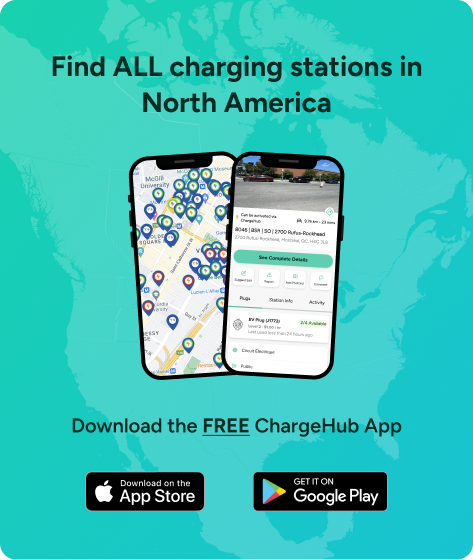
The ChargeHub app provides real-time availability across all major charging networks in Boulder, including ChargePoint, EVgo, Tesla, and city-operated stations. Download the ChargeHub app for iPhone or Android to check station status, compare charging costs, and pay across networks from a single platform. ChargeHub covers 67,000+ stations and 225,000+ charging ports across North America, making it the most comprehensive tool for EV charging in Boulder and beyond.
Charging Stats For Boulder

92%
of Level 2 Stations
427
total Level 2 Stations

8%
of Level 3 Stations
39
total Level 3 Stations
Percentage of Free Stations: 14%
Total Number of Free Stations: 64
Total Number of Charging Stations: 466
Main Networks: ChargePoint, Tesla, Blink